
Virtual Global Forum
Join us for the first annual Virtual Global Forum on reclaiming ancient and Indigenous knowledges in education
March 14 - 16, 2026
Online
Global Forum 2026 Schedule and Presenters
About the Global Forum
The Global Forum arose from a recognition of the need for spaces that highlight and share inspiring models and pedagogical approaches striving to render K-12 and post-secondary curricula and classroom practices more balanced and inclusive in their representations of traditionally marginalized ancient and Indigenous histories and wisdom traditions. The mission of this annual forum is therefore to foster dialogue and promote the exchange of pedagogical experiences, ideas, approaches, strategies, tools, and resources that can help with collectively fostering important and necessary change in terms of how we represent, teach, and engage with ancient and Indigenous histories, cultures, and wisdom traditions across various educational contexts.
The forum seeks to do this by bringing together educators (from both K-12 and postsecondary contexts), academics/researchers, activists, Elders, healers, government officials, curriculum developers, civil society organizations, and others to learn from and support one another.
We invite submissions that can help us learn from and critically engage with efforts to reform existing curricula and classroom practices in formal K-12 and post-secondary education contexts, as well as alternative models emerging in informal and nonformal educational settings.
Adopting online/virtual model seeks to ensure accessibility and inclusivity. The organizers are also committed to offering necessary resources and support to ensure the participation of those who may not have the technology or internet connectivity required to effectively join the conversations.
2026 FORUM THEME:
Educators’ Innovative Approaches and Experiences
Inspired by the overarching vision of seeking to achieve more balanced and inclusive representations of ancient and Indigenous histories and wisdom traditions in various educational spaces, the specific theme and focus of the global forum varies annually.
The first global forum in 2026 focuses on capturing educators’ experiences, innovative strategies and approaches in teaching and learning about ancient and Indigenous histories and traditions, including among both postsecondary educators and K-12 teachers, in formal and informal contexts, as well as in curricular and extracurricular spaces.
This forum is opened to participants from all geographic areas across the globe, with a special focus on contexts where the formal K-12 or postsecondary curriculum might omit, misrepresent, or perpetuate unbalanced representations of traditionally marginalized groups and their histories, wisdom traditions, and/or perspectives.
While attendance in the forum is open to anyone interested, we especially encourage submissions from:
University/postsecondary educators
K-12 school teachers
Teacher educators
Curriculum developers
Community leaders
Community educators in various informal settings (including but not limited to Elders; knowledge-keepers, and faith leaders)
Artists and activists
Forum Format
This will be a three day virtual forum (6 to 8 hours each day), to be held via a secure and reliable online platform.
Each day will have three 2.5 hour scheduled sessions, with each session including approximately three to four presenters.
Key Objectives
To inspire participants by showcasing and highlighting various models seeking to offer more balanced and inclusive representations of ancient and Indigenous histories and wisdom traditions in K-12/postsecondary education and other public spaces. This includes both formal and informal educational settings, as well as curricular and extracurricular contexts.
1
To promote dialogue between various stakeholders and identify means for collaboration and support.
2
To offer practical tools for ongoing critical engagement with curricular representations and classroom practices vis-à-vis ancient and Indigenous histories, cultures, and wisdom traditions.
3
To capture and disseminate those models, experiences, and approaches, helping promote and increase exposure for existing educational resources, and creating opportunities to jointly develop educational resources that might be missing, etc.
4
Our Team
Contact Me: jeremy.jimenez@cortland.edu
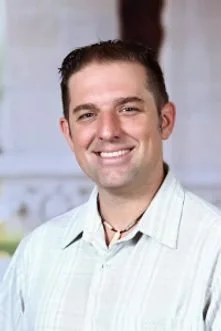
Dr. Jeremy Jiménez
Inaugural Chair
Jeremy Jiménez is an assistant professor in the Foundations and Social Advocacy Department at SUNY Cortland. He received his PhD in International and Comparative Education from Stanford University, his MA in sociology (Stanford), and his MEd in social studies education (Rutgers University). His publications have primarily focused on school textbook analysis as well as students’ and teachers’ engagement with social justice issues (such as anti-racism, environmental justice, and gender identity). He teaches future teacher candidates about race, class, gender, international, and ecological issues, increasingly from indigenous perspectives. He has previously taught high school social studies for over a decade in Norway, the United States, and Venezuela. Having now studied, conducted research, and/or traveled in over 160 countries around the world, these days Jeremy prefers to spend his time hiking, biking, and cross-country skiing and cultivating his permaculture garden (and treasuring the beautiful biodiversity that emerges).
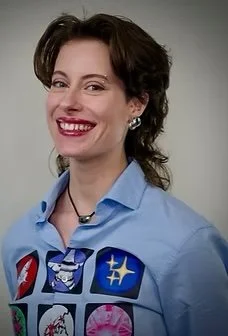
Dahlia Vionnet, MSW
Lead Organizer
Contact Me: dahlia.vionnet@mail.utoronto.ca
Dahlia (they/them) is a psychotherapist dedicated to creating spaces where people feel truly seen, heard, and supported. They received a Masters of Social Work in Social Justice and Diversity from the University of Toronto in 2025, and a BA in International Development studies in 2021. Their approach is trauma-informed, anti-oppressive, and humanistic. They practice radical genuineness and work to dismantle the power imbalance that often exists between clients and mental health practitioners. Dahlia also has extensive experience in the non-profit sector, including roles at Stella’s Place, Just For Today, and YAAACE, where they supported individuals and communities, designed meaningful programming, and responded to the realities of trauma and systemic violence. Alongside practice, Dahlia is an emerging scholar and writer. Their current projects include a comparative analysis of global violence prevention strategies that identifies the defining characteristics of a public health approach, as well as a critical genealogy and theory of DBT. They work closely with mentors who enrich their learning as they build a future in authorship and community-based research. As a queer French settler in Tkaronto, Dahlia values connection over production, authenticity over perfection, and community over isolation.